# Soren Kierkegaard
| 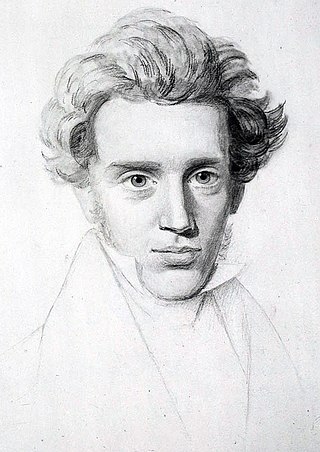 | Søren Aabye Kierkegaard was a Danish theologian, philosopher, poet, social critic, and religious author who is widely considered to be the first existentialist philosopher. He wrote critical texts on organized religion, Christianity, morality, ethics, psychology, and the philosophy of religion, displaying a fondness for metaphor, irony, and parables. Much of his philosophical work deals with the issues of how one lives as a "single individual", giving priority to concrete human reality over abstract thinking and highlighting the importance of personal choice and commitment. He was against literary critics who defined idealist intellectuals and philosophers of his time, and thought that Swedenborg, Hegel, Fichte, Schelling, Schlegel, and Hans Christian Andersen were all "understood" far too quickly by "scholars." |
|-|-|
| | wikipedia:: [Søren Kierkegaard](https://en.wikipedia.org/wiki/S%C3%B8ren_Kierkegaard) |
in:: [[Existentialists]]
sep:: [Søren Kierkegaard (Stanford Encyclopedia of Philosophy)](https://plato.stanford.edu/entries/kierkegaard/)
> Much of his philosophical work deals with the issues of how one lives as a "single individual," giving priority to concrete human reality over abstract thinking and highlighting the importance of personal choice and commitment.[12]
[[Anxiety|Anxiety]]
[[Leap of faith]]
[[Knight of faith]]
[[Double movement of faith]]
[[Life can only be understood backwards; but it must be lived forwards.]]
[[Philosophical Fragments or a Fragment of Philosophy]]
## By Soren Kierkegaard
```dataview
TABLE by, source, date, rating, file.etags AS tags
FROM #Type/Card
WHERE contains(by, this.file.link) OR
contains(by, this.file.name)
SORT file.etags DESC
```