# Dunning–Kruger Effect
| 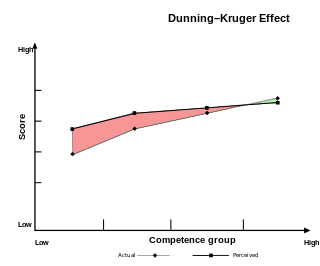 | The **Dunning–Kruger Effect** is a cognitive bias in which people with limited competence in a particular domain overestimate their abilities. It was first described by Justin Kruger and David Dunning in 1999. Some researchers also include the opposite effect for high performers: their tendency to underestimate their skills. In popular culture, the Dunning–Kruger effect is often misunderstood as a claim about general overconfidence of people with low intelligence instead of specific overconfidence of people unskilled at a particular task. |
| ------------------------------------------------------------------------------------------------------------------------------------------------------- | ---------------------------------------------------------------------------------------------------------------------------------------------------------------------------------------------------------------------------------------------------------------------------------------------------------------------------------------------------------------------------------------------------------------------------------------------------------------------------------------------------------------------------------------------------------------- |
| | wikipedia:: [Dunning–Kruger effect](https://en.wikipedia.org/wiki/Dunning%E2%80%93Kruger_effect) |
[[The problem with the world is that the intelligent people are full of doubts, while the stupid ones are full of confidence.]]